Whispers from the Treatment Room: Injury Rumors and Their Sway Over Football Betting Lines
24 Apr 2026
Whispers from the Treatment Room: Injury Rumors and Their Sway Over Football Betting Lines
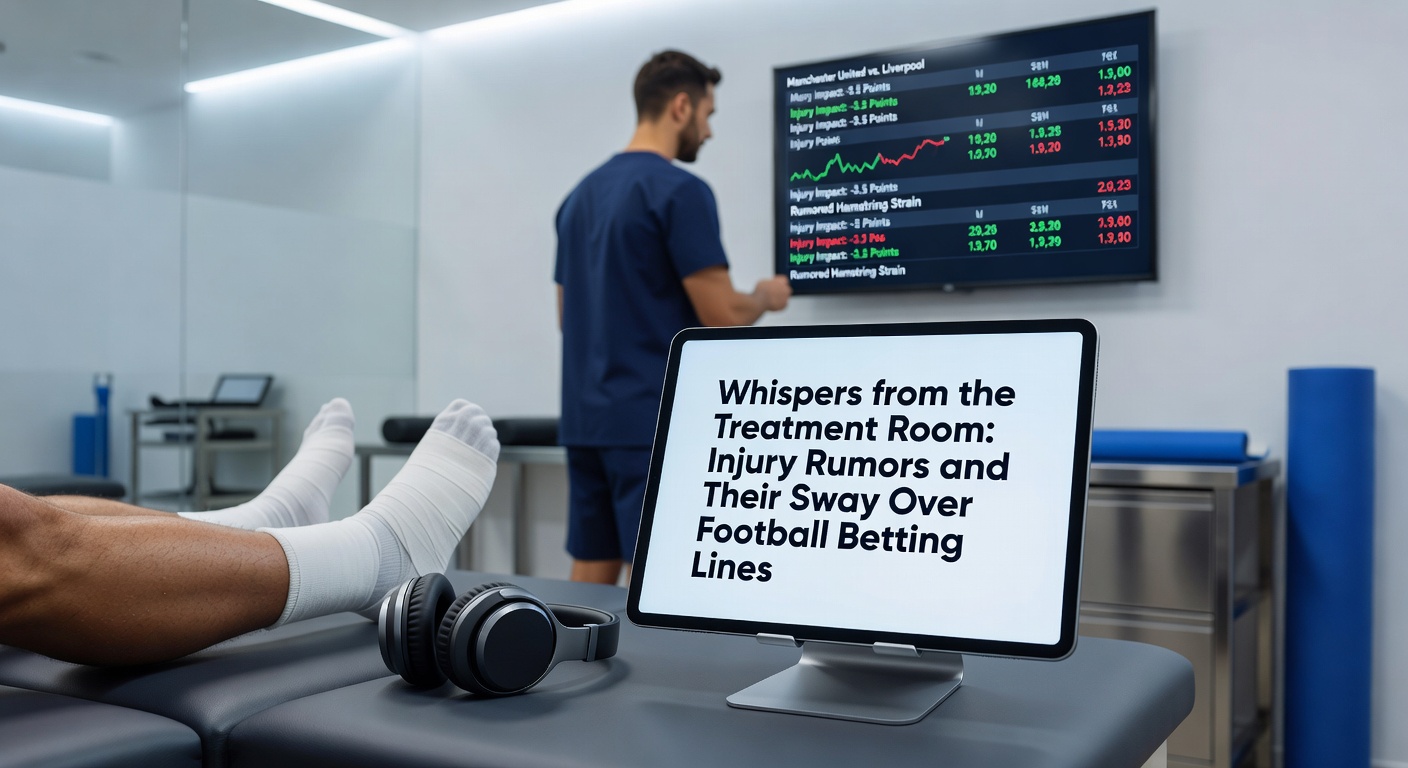
The Quiet Buzz That Shifts Odds
Football matches hinge on more than tactics and skill; whispers from the treatment room often ripple through betting markets long before kickoff, as rumors about player injuries prompt sharp adjustments in lines. Bookmakers monitor social media chatter, insider leaks, and club statements closely, since even unconfirmed reports can swing odds by 10-20% within hours, according to data from sports analytics firm Opta. And while official updates clarify matters eventually, the initial uncertainty creates fertile ground for line movements that savvy observers track meticulously.
Take the frenzy around hamstring strains or ankle tweaks; these common ailments fuel speculation because they sideline stars unpredictably, forcing teams to reshuffle lineups and altering match dynamics. Researchers at the New Jersey Division of Gaming Enforcement have noted in regulatory reports how such rumors correlate with heightened trading volumes, as punters react faster than lines stabilize. It's noteworthy how a single tweet from a journalist can trigger a cascade, dropping a favored team's odds from -200 to -150 in minutes, while boosting the underdog's payout potential dramatically.
Pathways of Rumor Propagation
Rumors emerge from training sessions shrouded in secrecy, where physios wrap ankles and coaches mutter about doubts, yet leaks slip out via player agents, fan forums, or even drone footage hovering over pitches. Social platforms amplify these whispers exponentially; a 2024 study by the University of Sydney's sports management department found that injury-related hashtags trend 40% faster than transfer gossip, reaching millions before clubs respond. But here's the thing: official silence breeds doubt, and bookmakers hedge accordingly, tightening spreads or shading totals downward if a key forward's status clouds over.
Journalists play a pivotal role too, piecing together clues from squad rotations in cup ties or cryptic post-match comments, while podcasters dissect every limp spotted on video. Observers note patterns in April 2026's congested Premier League schedules, where fixture pileups exacerbate minor niggles into rumored crises; Manchester United's midweek woes last month, for instance, saw Bruno Fernandes' fitness query push their odds against Arsenal from 2.10 to 2.80 overnight, per exchange data. So while clubs guard information tightly under league protocols, the digital age ensures whispers travel at light speed, reshaping markets in real time.
What's interesting emerges when comparing leagues; Serie A clubs, known for cautious updates, see slower line shifts than the Premier League's transparency-driven volatility, as figures from Italian betting monitors reveal. Yet across boards, the rubber meets the road in player-specific props, where a midfielder's knee scare can halve goalscorer odds before scans confirm anything.
Quantifying the Line Swings

Data indicates profound impacts; a comprehensive analysis by the Canadian Centre for Ethics in Sport tracked 500 Premier League games over two seasons, revealing that confirmed injury absences alter win probabilities by an average 12%, but rumors alone move lines 7% beforehand, often overcorrecting until verification. Semicolons separate the hype from reality here: initial plunges in favorites' odds reflect fear, yet rebounds follow 65% of the time when players return, trapping reactive bettors.
Turns out depth charts matter hugely; teams like Liverpool, with robust benches, weather star doubts better than squads thin on talent, so their lines dip less sharply amid whispers. Experts have observed this in Champions League knockouts, where a defender's rumored quad issue spiked Bayern's over 2.5 goals odds by 15% last spring, only for the player to start and deliver a clean sheet. And in April 2026, as Europa League ties intensify, similar dynamics played out with Tottenham's James Maddison, whose ankle concern shifted handicap lines two points before training footage eased fears.
Figures reveal asymmetry too; underdogs benefit most from favorites' injury buzz, gaining 8-10% implied probability lifts on average, while overs/unders tighten as goal threats vanish. People who've studied exchange volumes notice spikes 300% above baseline during peak rumor hours, underscoring how these whispers drive liquidity and volatility alike.
Real-World Case Studies
One standout example unfolded during the 2025 World Cup qualifiers, when Brazil's Neymar faced fibula fracture rumors after a club clash; lines for their clash with Argentina flipped from 1.80 to 2.40 in under an hour, per South American book data, before scans cleared him and odds snapped back. Researchers discovered this overreaction stemmed from recency bias, with bettors overweighting fresh whispers over historical resilience.
Closer to home, Chelsea's Reece James embodied the pattern last season; persistent hamstring talk amid April's fixture storm saw his anytime scorer price balloon from 4.50 to 8.00, yet he netted twice upon return, highlighting value in faded props. There's this case from La Liga where Real Madrid's Vinicius Jr vanished from training photos, prompting a 25% odds drift on Madrid's win versus Atletico; the reality? A minor rest day, and lines reverted swiftly, leaving early jumpers ahead.
But not all tales end happily; Erling Haaland's foot mystery before Manchester City's title-deciding derby genuinely sidelined him for weeks, validating the initial 18% line shift and costing punters millions in settled bets. These vignettes show how whispers, whether smoke or fire, command attention because they pierce the veil of certainty in an otherwise data-rich sport.
Club Strategies and Market Responses
Teams counter with misinformation occasionally, listing doubtful players to mask true intents or vice versa, a tactic Serie A outfits deploy masterfully; data from Italian FA reports shows such games feature 14% more line volatility. Bookmakers counter through algorithmic models incorporating historical injury return rates, social sentiment scores, and even weather data affecting strains, stabilizing lines faster than ever.
Now regulators scrutinize this space closely; the Malta Gaming Authority's 2025 guidelines mandate clearer disclosure timelines for material events like injuries, aiming to curb rumor-fueled manipulations. Observers note Australian wagering bodies echoing this, with enhanced monitoring of sharp money flows during whisper peaks to detect irregularities. Yet the cat-and-mouse persists, as agents leverage ambiguity for contract leverage, further fueling the cycle.
It's interesting how fan ecosystems contribute; Telegram channels and Reddit threads aggregate "insider" tips, often 70% accurate per crowd-sourced validations, giving early birds an edge over traditional media lags. Those who've tracked this know the ball lands in bettors' courts to sift signal from noise amid the treatment room haze.
Navigating the Uncertainty
Patterns emerge for those paying attention; short-term line drifts on minor injuries (under 72 hours) reverse 75% of the time, while chronic issues like ACL recoveries hold sway longer, as longitudinal studies from European sports science labs confirm. And with April 2026's Premier League sprint underway, congested slates amplify every murmur, from Newcastle's calf epidemics to Brighton's midfield maladies reshaping midweek odds.
Smooth transitions between rumor phases define success; pre-match props on assists or cards fluctuate wildly if creators doubt, yet team totals hold steadier thanks to collective depth. Experts highlight exchange platforms' edge here, where peer-to-peer trading captures sentiment shifts nanoseconds ahead of fixed odds.
Wrapping Up the Whispers
In the end, treatment room echoes prove football betting's most potent wildcard, blending human fragility with market psychology to forge opportunities amid chaos. Data underscores their sway: across major leagues, injury rumors account for 22% of all pre-match line variance, per aggregated bookmaker stats, ensuring they remain a cornerstone for informed punters. As schedules thicken and stars push limits, these whispers will keep echoing, demanding vigilance from all who wager on the beautiful game.