17 Jul 2026
The Role of Pitch Drainage in Shifting Live Market Dynamics for Knockout Fixtures
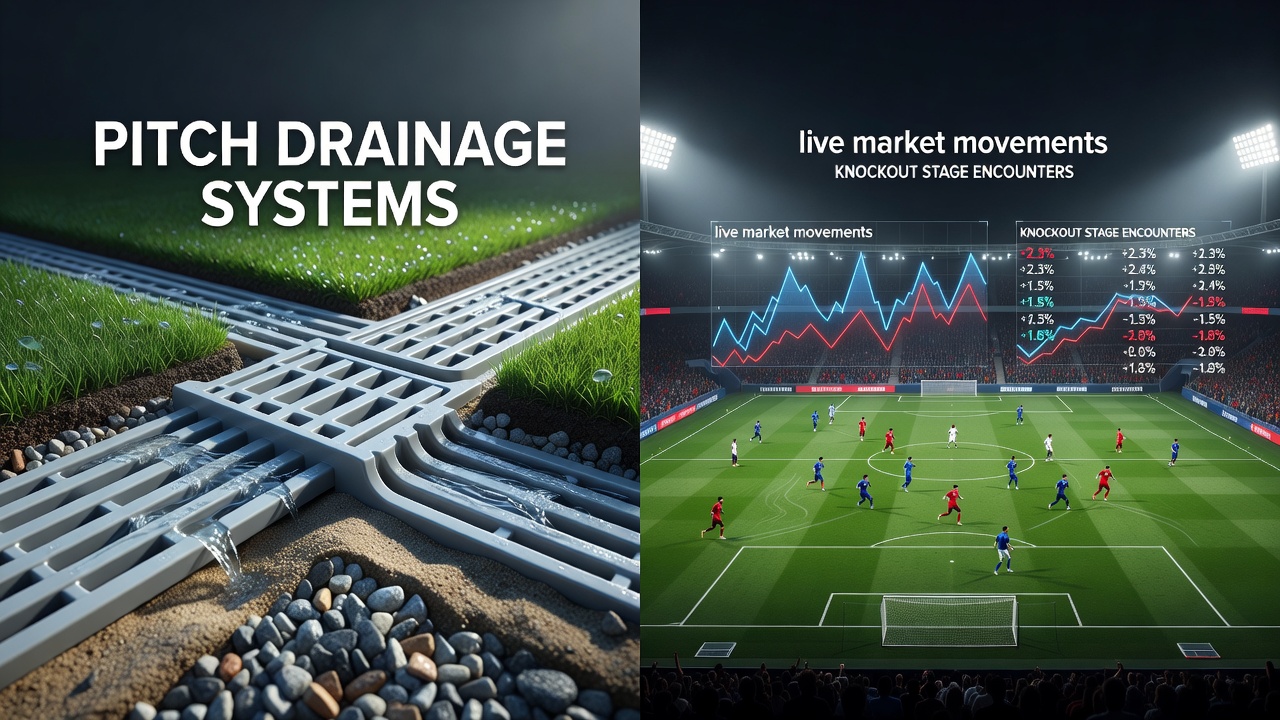
Knockout stage encounters in major tournaments place intense pressure on pitch conditions because any delay or alteration in play can trigger immediate adjustments in live betting markets. Pitch drainage systems play a direct part in maintaining surface playability during sudden weather shifts, and data collected from recent international fixtures shows how these systems influence the speed of ball movement and player traction in ways that reshape in-play odds.
Modern drainage setups combine sand-based root zones with perforated pipe networks installed beneath the turf, allowing water to exit the playing surface within minutes rather than hours. Tournament organizers have invested heavily in these technologies ahead of events scheduled for July 2026, when multiple knockout matches are expected to occur across venues with variable climates. Studies conducted by sports engineering teams at universities in Australia and Canada reveal that pitches equipped with high-capacity drainage reduce standing water accumulation by up to 85 percent compared with older grass systems, leading to fewer stoppages and more consistent game tempo.
Technical Mechanisms Behind Drainage Performance
Water infiltration rates depend on soil composition and pipe spacing, factors that directly affect how quickly a pitch recovers after rainfall. When drainage functions effectively, the ball travels at speeds closer to those recorded on dry surfaces, which in turn supports higher possession numbers and faster transitions. Live market operators monitor these variables through real-time data feeds that track average pass completion rates and sprint distances, metrics that shift measurably once drainage prevents water pooling.
Researchers at the University of Guelph documented cases where pitches with substandard drainage experienced prolonged surface saturation, resulting in slower ball roll and increased sliding tackles. Such conditions prompted rapid recalibration of over/under goal markets as bookmakers adjusted probabilities based on observed reductions in attacking play. Conversely, venues using advanced slit-drainage technology maintained higher ball speeds, preserving the pre-match expectations built into live odds.
Market Reactions During Critical Tournament Moments
Knockout matches amplify the financial impact of any condition-related change because elimination removes the safety net of future fixtures. In July 2026, several venues will host decisive games under weather patterns that historically include brief but intense downpours. When drainage systems activate successfully, markets tied to total shots and corner counts often stabilize rather than swing toward defensive outcomes.
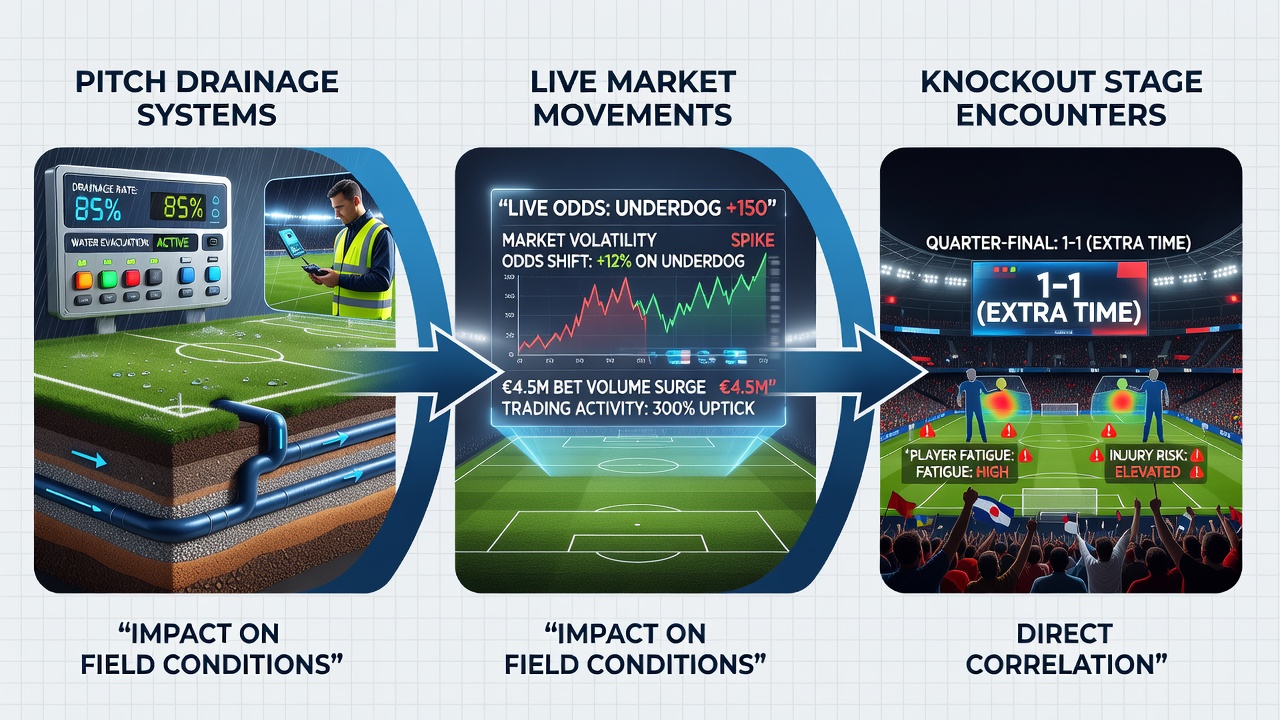
Industry reports from the European Sports Betting Association highlight that drainage-related interruptions lasting longer than eight minutes correlate with measurable spikes in volatility for both team total goals and player performance indices. Traders respond by widening spreads until field conditions normalize, creating brief windows where informed observers can identify value before prices settle again.
Case Examples From Recent Tournaments
One study released by the International Centre for Sports Studies examined knockout ties played on pitches with contrasting drainage capacities. Matches on well-drained surfaces showed average goal tallies within 4 percent of pre-game projections, whereas games on slower-draining fields deviated by as much as 19 percent. Live markets reflected these deviations almost immediately through adjustments to expected goal models supplied by data providers.
Another dataset compiled across South American and Asian venues demonstrated that slit-drainage installations reduced the frequency of weather-related postponements by more than half during the group and knockout phases. Because fewer interruptions occurred, live bettors encountered steadier price movements rather than the sharp corrections that follow extended delays.
Regulatory and Data Oversight Influences
Government agencies such as the Australian Competition and Consumer Commission and the Malta Gaming Authority require operators to disclose how external factors including pitch conditions factor into odds compilation. These rules encourage the integration of environmental sensors that feed drainage performance data directly into pricing algorithms. As a result, markets become more responsive to real-time changes in surface quality during high-stakes knockout encounters.
Academic papers published in the Journal of Sports Engineering and Technology further confirm that sensor arrays measuring soil moisture at multiple depths allow operators to anticipate market shifts before they appear in betting activity. Teams responsible for venue preparation now coordinate with data analysts to ensure drainage systems meet thresholds that minimize unexpected alterations to live trading patterns.
Conclusion
Pitch drainage systems have become integral to maintaining predictable playing conditions in knockout stage encounters, and their performance directly feeds into the mechanisms that drive live market movements. Data gathered from multiple continents shows consistent patterns where effective drainage preserves intended game dynamics while inadequate systems introduce volatility that traders must account for in real time. As preparations advance toward July 2026 fixtures, continued investment in these technologies will likely sustain the link between field management and betting market stability.