7 Jun 2026
The Cascading Impact of Fixture Pileups on Live Markets in Premier League and European Ties

Fixture pileups emerge when clubs face multiple matches across domestic leagues and European competitions within tight timeframes, and data from scheduling bodies shows these clusters often span just a few days between games. Researchers at sports analytics firms have tracked how such congestion alters player availability, team performance metrics, and ultimately the movement of prices in live trading environments for top-flight encounters and continental ties alike.
League calendars in England, Spain, and Italy frequently overlap with Champions League or Europa League rounds, creating sequences where teams play three or four fixtures in ten to fourteen days. Figures from UEFA competitions indicate that participating clubs encounter an average of 50 to 60 matches per season when all fronts remain active, and this volume intensifies during winter months when weather disruptions add further rescheduling pressures.
Patterns Observed in Congested Periods
Statistical reviews of Premier League seasons reveal that teams involved in European ties record measurable drops in distance covered and high-intensity runs during subsequent domestic fixtures, according to performance data compiled by Opta and similar providers. These physical declines correlate with shifts in live market odds as traders adjust probabilities based on real-time indicators such as starting lineups and early match statistics.
One study released by a European sports science institute examined over 200 congested sequences and found elevated rates of muscular injuries when recovery windows fell below seventy-two hours. Market participants monitoring these patterns respond by widening spreads on outcomes involving fatigued squads, while liquidity in certain derivative markets such as player performance specials contracts or expands depending on the visibility of squad rotation news.
Transmission Mechanisms Across Competitions
Live markets react first to official team sheets released ninety minutes before kickoff, yet earlier signals from training reports and press conferences already influence order books in the hours leading up to games. When a key midfielder appears on the bench during a midweek European fixture, algorithms and human traders alike recalibrate expectations for the weekend league match, producing rapid price adjustments that propagate across related markets including total goals and Asian handicap lines.
European ties add another layer because travel distances and time-zone changes compound fatigue for squads crossing continents. Data compiled by the FIFA international calendar working group highlights that clubs with South American or African players face additional strain when national team windows precede or follow continental club matches, and these overlaps become particularly acute ahead of the expanded 2026 tournament scheduled for June.
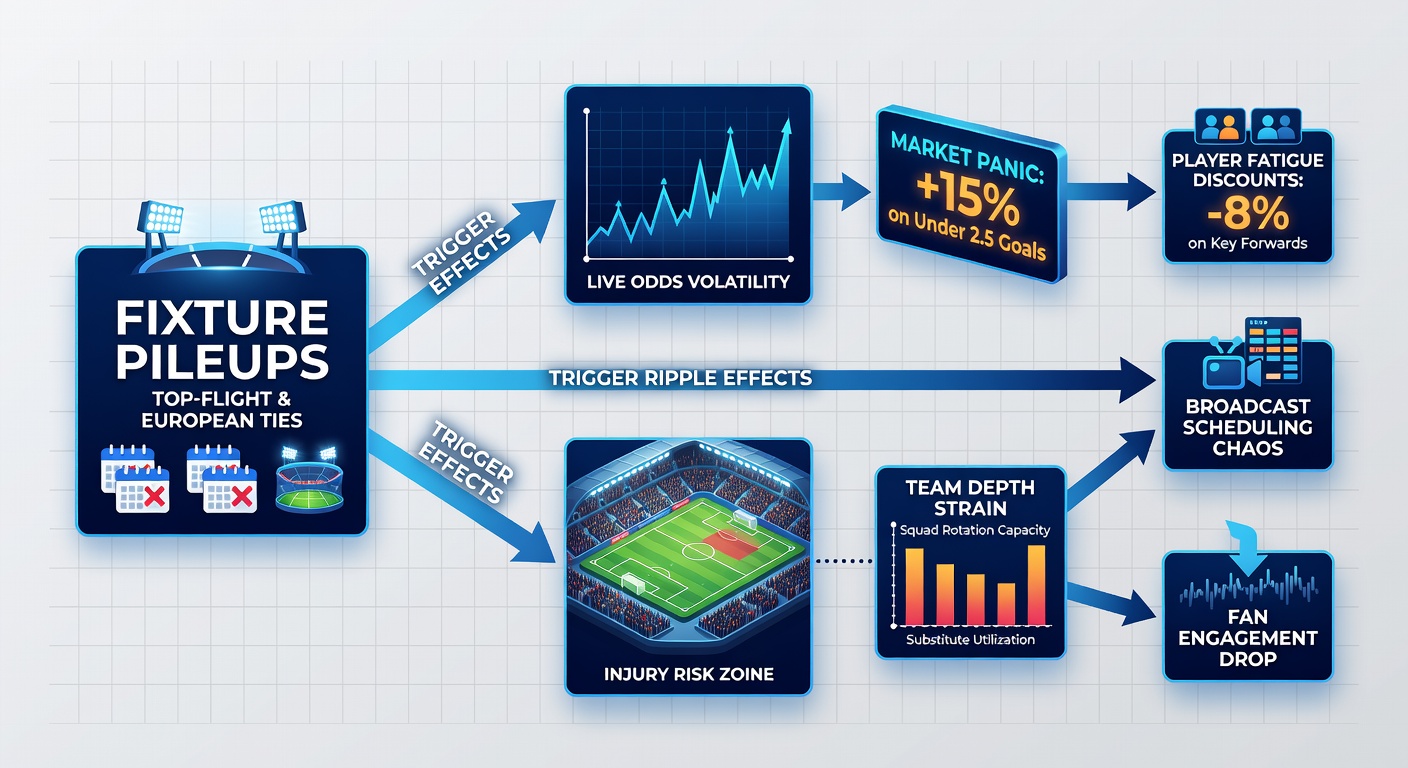
Take the case of an English club advancing deep in the Champions League while contesting the domestic title race. Observers note that bookmakers widen margins on both the midweek away fixture in Eastern Europe and the immediate Premier League return because historical datasets show higher variance in results under such conditions. Liquidity providers respond by quoting wider spreads until lineups confirm the extent of rotation, and this caution extends to related markets on opposing teams who may exploit the situation.
Regulatory and Industry Perspectives
Authorities in several jurisdictions track these scheduling dynamics as part of broader integrity monitoring. The Australian Competition and Consumer Commission has published papers on how fixture density influences betting volumes and price discovery in sports wagering, while Canadian provincial regulators require operators to maintain transparent records of market movements during high-profile congested periods.
Industry associations such as the European Gaming and Betting Association compile anonymized data showing that trading volumes in live football markets increase by 30 to 40 percent during weeks with multiple overlapping competitions. These spikes occur because participants seek to capitalize on perceived inefficiencies arising from incomplete information about squad conditions.
Future Scheduling Considerations Around June 2026
Preparations for the 2026 FIFA World Cup, set to begin in June of that year across North American venues, have already prompted discussions among league organizers about protecting recovery periods. UEFA and domestic federations are reviewing calendar alignments to minimize overlaps that could affect both player welfare and the predictability of outcomes feeding into live market models.
Clubs with substantial European commitments continue to lobby for adjustments, citing evidence that shorter recovery cycles elevate uncertainty. Market analysts therefore anticipate continued volatility in live pricing whenever fixture lists create tight clusters, particularly in seasons leading into major international tournaments.
Conclusion
Fixture pileups generate measurable downstream effects on live market behavior through changes in physical output, injury risk, and information asymmetry. Data from multiple seasons demonstrates consistent patterns of price adjustment once congestion signals appear, and these dynamics are expected to persist as calendars remain densely packed ahead of the 2026 World Cup. Continued monitoring by regulatory bodies and performance analysts provides ongoing insight into how schedules shape trading conditions across top-flight and European competitions.