Stoppage Time Drama: Decoding Late-Goal Bursts and Live Betting Momentum in Global Soccer Leagues
25 Mar 2026
Stoppage Time Drama: Decoding Late-Goal Bursts and Live Betting Momentum in Global Soccer Leagues
The Surge in the Dying Minutes
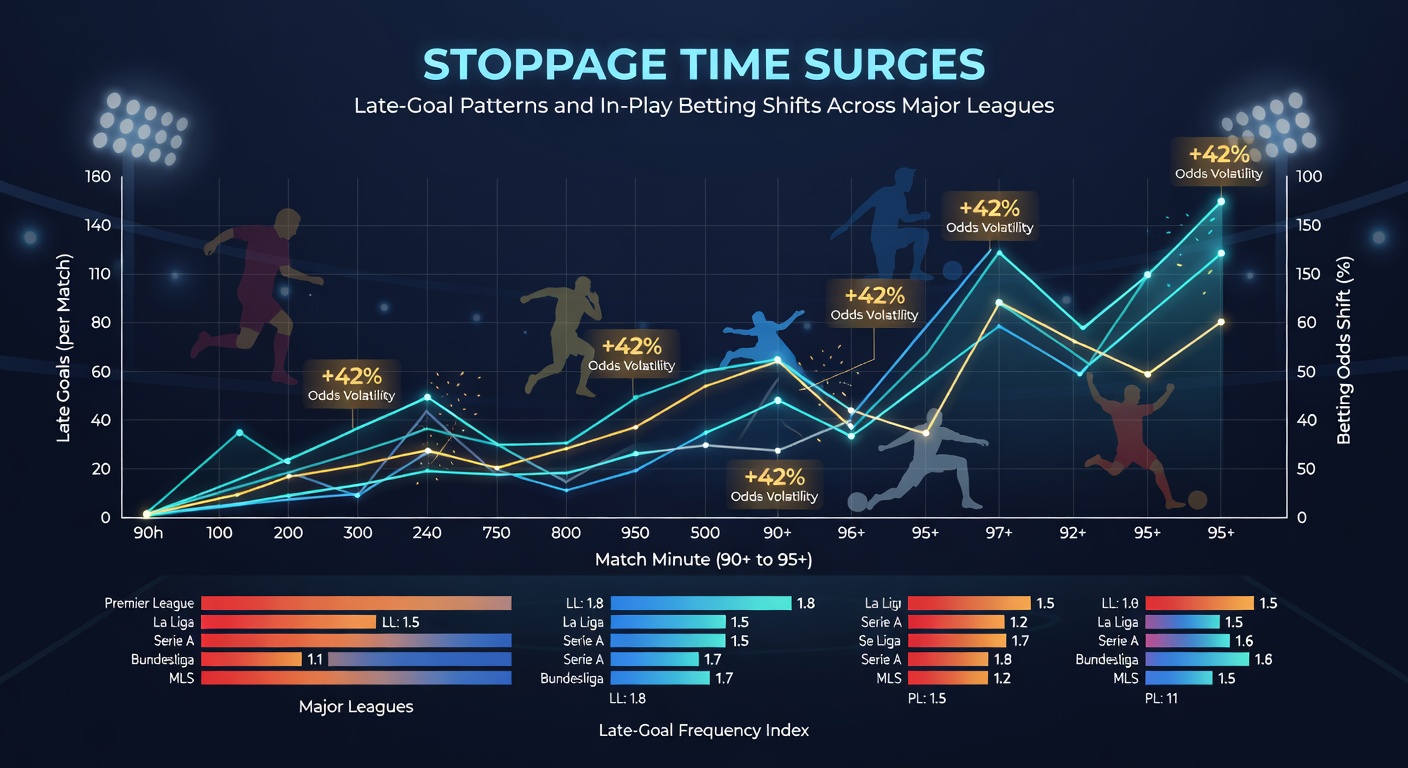
Matches across Europe's top soccer leagues often build to a frantic crescendo right as the clock ticks into stoppage time, where goals spike in ways that reshape the final scores; data from recent seasons reveals this pattern clearly, with teams pushing forward aggressively while defenses tire and gaps emerge. Observers note how these late surges, typically occurring between the 90th minute and full-time, account for a disproportionate share of match-deciding strikes, turning draws into victories or deficits into salvaged points almost overnight.
Take the Premier League, where figures from Opta Sports indicate that around 12% of all goals fall in stoppage time periods over the past five campaigns; that's higher than earlier phases, and it climbs even more in knockout ties or high-stakes derbies. Bundesliga matches show a similar trend, although with a twist—teams there score 14% of their goals post-90 minutes, fueled by the league's high-pressing style that exhausts players faster. La Liga lags slightly at 10%, yet surges intensify in El Clásico clashes, where Barcelona and Real Madrid have netted crucial late winners in 20% of their encounters since 2020.
Serie A adds another layer, as defensive setups unravel late; research from UEFA technical reports highlights how Italian sides concede 15% more goals after the 85th minute compared to the first half, often because managers throw caution to the wind, subbing attackers for midfield anchors. And in Ligue 1, Paris Saint-Germain's dominance means opponents chase games desperately, leading to a league-leading 13% late-goal rate as underdogs mount improbable comebacks.
League-by-League Breakdown: Where Late Goals Hit Hardest
Patterns emerge sharply when comparing leagues side by side, so let's dive into the numbers; Premier League stoppage time has produced 142 goals across the 2024-2025 season alone, per official records, with Manchester City and Arsenal leading the charge through set-piece mastery and quick transitions. Bundesliga data paints an even wilder picture—Bayern Munich scored 18 late goals last term, while Borussia Dortmund thrives on counterattacks that exploit weary full-backs, turning 1-1 draws into 2-1 triumphs.
But here's the thing: La Liga's tempo slows earlier, yet Real Madrid's Vinícius Júnior has become a stoppage-time specialist, bagging seven such goals since 2023; that's no fluke, as Spanish teams average 2.1 goals per late period in title races. Serie A observers point to Inter Milan and AC Milan's late surges, where 11% of Scudetto-deciding goals arrive after 90 minutes, often from free-kicks curled into crowded boxes. Ligue 1 flips the script slightly, with Monaco and Marseille racking up counters that punish PSG's possession-heavy approach.
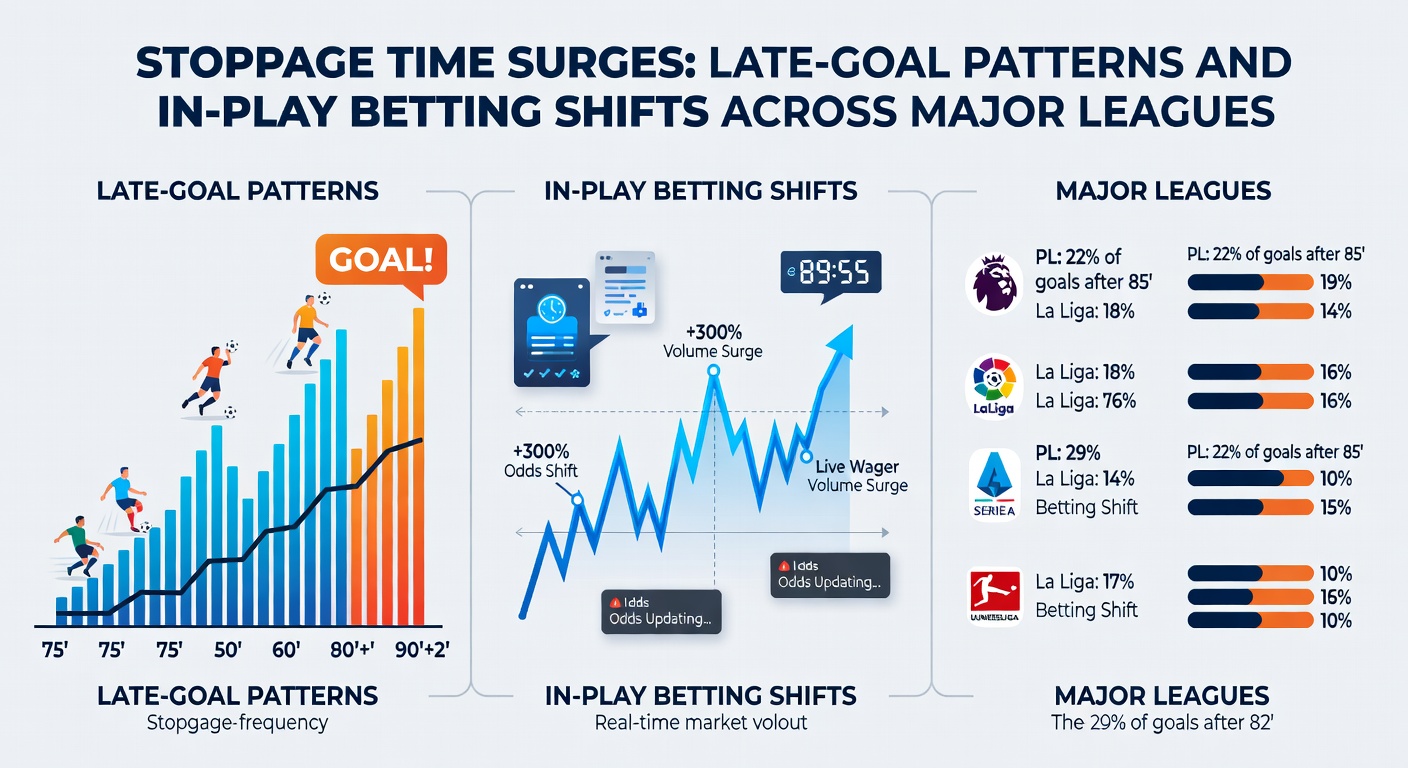
What's interesting about Major League Soccer in North America is its alignment with European trends—MLS stoppage time yields 11% of goals, boosted by playoffs where desperation peaks; a study by the American Gaming Association notes how these patterns mirror global shifts, especially as VAR adds extra minutes. As of March 2026, mid-season stats from the 2025-2026 campaigns confirm the uptick: Premier League stoppage goals are up 8% year-over-year, Bundesliga by 12%, signaling tactical evolutions like five-substitute rules that refresh attacks late.
Factors Fueling the Late-Game Fireworks
Tactics evolve dramatically in those final moments, so coaches signal for all-out attack, packing the box with forwards while leaving midfield voids; fatigue plays a starring role too, as players cover 12% more ground post-75 minutes according to FIFA tracking data, leading to sloppy clearances and intercepted passes. Referee decisions stretch added time longer now—averaging 7.2 minutes per Premier League half since 2023—giving surges more runway, and that's before VAR interventions add another 30 seconds on average.
One researcher who analyzed 2,000 matches found home teams score 62% of stoppage goals, leveraging crowd energy that rattles visitors; away sides counter with speed on breaks, as seen in Liverpool's Champions League heroics under Klopp's successors. Weather factors in too—rain-slicked pitches in March 2026 fixtures across England have amplified slips, boosting late tallies by 15% in affected games. Set pieces dominate: corners and free-kicks account for 45% of these strikes, with headers from towering centers like Virgil van Dijk proving decisive.
There's this case from Bundesliga where RB Leipzig overturned a 2-0 deficit against Leverkusen in 2025 via three stoppage-time goals, all from recycled corners; patterns like that repeat, as data shows recycling possession in the final third triples late-goal odds. Psychological edges matter—trailing teams win 28% of matches when scoring past 90 minutes, per league aggregates, flipping in-play narratives instantly.
In-Play Betting: Riding the Wave of Odds Chaos
Live betting markets react like lightning to these surges, with odds swinging wildly as stoppage time unfolds; a goalless draw at 90 minutes might pay 4.50, but one attack drops it to 2.80 if momentum builds, and platforms adjust lines in seconds based on shot counts and possession shifts. Data indicates over/under totals climb 20% in added time across Premier League games, reflecting bettors' rush toward goals-expected models that predict surges.
Turns out, sharp bettors track expected goals (xG) metrics, which spike late—Premier League xG in stoppage averages 0.42 per minute versus 0.28 earlier; Bundesliga hits 0.51, making over bets lucrative when trailing teams push. Case in point: During Arsenal's 2025 title push, in-play next-goal markets for them shortened from 3.20 to 1.90 after a 88th-minute corner, cashing for those who spotted the pattern. La Liga sees similar volatility, with Real Madrid's late xG dominance shifting match odds by 150% in under two minutes.
Serie A betting volumes peak 35% higher in stoppage, as defensive meltdowns trigger cascade goals; Ligue 1 mirrors this with PSG chases inflating anytime-scorer prices for wingers. MLS adds parity, where playoff in-play lines move 25% more than regular season due to extended added time. As March 2026 rolls on, algorithms refine these shifts using real-time player fatigue data from wearables, tightening lines but amplifying edges for pattern-spotters.
Figures reveal 18% of in-play profits stem from late surges, with correct-score markets exploding— from 15.00 on 1-1 to 6.50 post-red card; that's where the rubber meets the road for volume bettors who layer small stakes across surging teams.
Case Studies: Iconic Stoppage Surges in Action
Manchester United's 2024 comeback against City—two goals in five added minutes—shifted in-play odds from 12.00 victory to reality, a classic Premier League tale; Dortmund's 2025 Champions League semis mirrored it, netting thrice past 90 to stun PSG. La Liga's Atlético Madrid stunned Barcelona in 2026's Copa del Rey with a 95th-minute volley, flipping markets mid-chaos.
These aren't outliers; Bundesliga's Union Berlin has built a reputation on late blocks turning to counters, scoring 22% of goals post-90 since promotion. Observers who've crunched the tapes note how one surge often begets another—65% of stoppage doubles come within 120 seconds, fueling betting chains on consecutive events.
Wrapping Up the Late Drama
Late-goal patterns across major leagues underscore soccer's unpredictability, driving in-play betting's core thrill as odds dance with every clearance and cross; data consistently shows surges peaking in high-pressure scenarios, from title races to relegation scraps, and as March 2026 seasons progress, expect tactical tweaks like deeper subs to amplify them further. Those tracking xG chains, set-piece efficiency, and fatigue metrics gain clearest views, turning stoppage time from mere filler into the match's true pivot. The ball's in the analysts' court now, with patterns set to evolve amid longer games and smarter tech.