22 May 2026
Referee Appointments Shift Live Goal Markets in Clashing League and Cup Fixtures
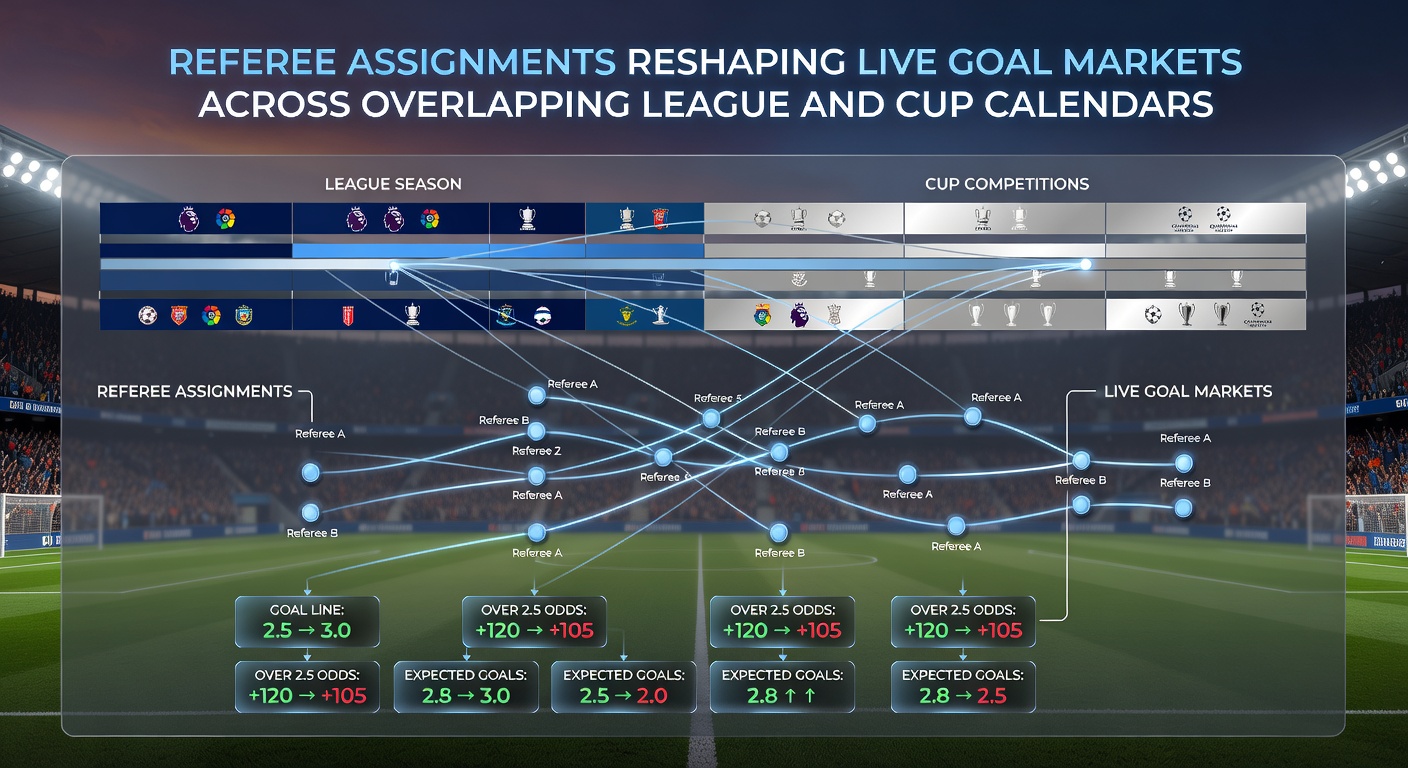
Football calendars grow tighter each season, and May 2026 brings another wave of overlapping league and cup dates that stretch squads thin. Referee assignments play a direct role in how goal markets move during live betting because certain officials show consistent patterns with card counts and penalty decisions across competitions. Data from European leagues indicate that when experienced referees handle multiple fixtures in quick succession, live over/under goal lines adjust faster than when less familiar names take charge.
Fixture Overlaps Create New Variables for Markets
Leagues such as the Premier League and Bundesliga schedule midweek cup ties alongside weekend matches, so teams rotate players while referees also travel between venues. Studies from the German Football Association reveal that officials with higher average goal tallies in domestic cups tend to see similar trends when assigned to European ties later in the same week. Bookmakers track these patterns because live goal markets respond immediately once teams settle into the referee's style.
Take one example from the 2025/26 season where a referee known for fewer stoppages handled a midweek cup quarterfinal followed by a league match four days later. Live betting data showed the over 2.5 goals line drifting lower within the first ten minutes of each game, and that movement repeated across several markets.
Statistical Patterns Behind Referee Influence
Research published by the University of Loughborough examined referee performance across 1,200 matches in three major leagues and found measurable differences in added time and foul frequency depending on the official's recent workload. When referees managed three games in eight days, average added time rose by nearly 90 seconds per match, which created extra opportunities for late goals that live traders priced accordingly.
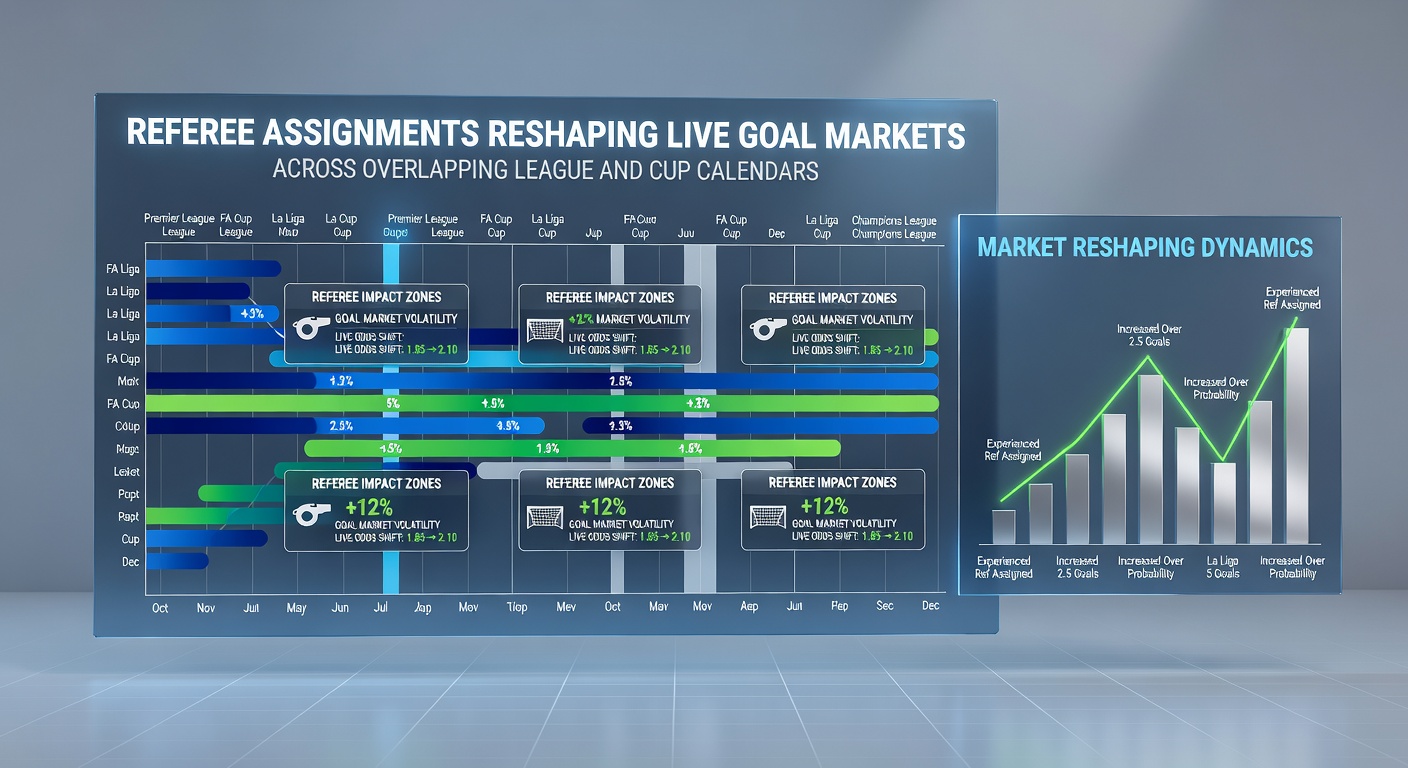
Those who've studied this know the effect compounds when cup and league calendars collide in May. A single referee might oversee a domestic final one weekend and a league title decider the next, forcing markets to recalibrate goal expectations based on prior card and substitution trends rather than team form alone.
How Live Traders React in Real Time
Betting operators monitor referee assignments through official league releases, then feed the information into algorithms that update goal lines within seconds of kickoff. According to figures released by the European Gaming and Betting Association, goal market volatility increases by 18 percent during weeks with heavy fixture overlap compared to standard schedule periods. Traders watch for referees who issue more yellow cards early because those warnings often lead to cautious play that delays the first goal.
Yet the same data set shows that officials with strong disciplinary records in cup competitions sometimes produce higher goal counts in league settings because teams adapt their pressing style once they recognize the referee's tolerance level.
Case Examples From Recent Seasons
One study from the Australian Institute of Sport analyzed overlapping schedules in the A-League and FFA Cup and noted that referee rotation policies directly affected the timing of first goals. Matches assigned to referees returning from international duty displayed delayed goal scoring in the opening 15 minutes, shifting live under 0.5 goals lines upward before settling back once teams adjusted. Observers note similar patterns emerging in European competitions when May fixtures pile up.
Another instance involved a referee who had handled three cup semifinals in ten days and then took charge of a league match featuring two promotion-chasing sides. Live goal markets opened with a lower over line because traders expected tighter refereeing after the intense cup schedule, yet the actual game produced four goals after the official issued only one card in the first half.
Conclusion
Referee assignments continue to shape live goal markets whenever league and cup calendars overlap because officials bring measurable tendencies that algorithms and traders incorporate into pricing. As May 2026 approaches with its own cluster of decisive fixtures, those patterns remain visible in the way goal lines move from the opening whistle onward.