28 Jul 2026
International Breaks Force Clubs to Recalibrate Squad Depth Metrics and Trigger Live Transfer Market Shifts
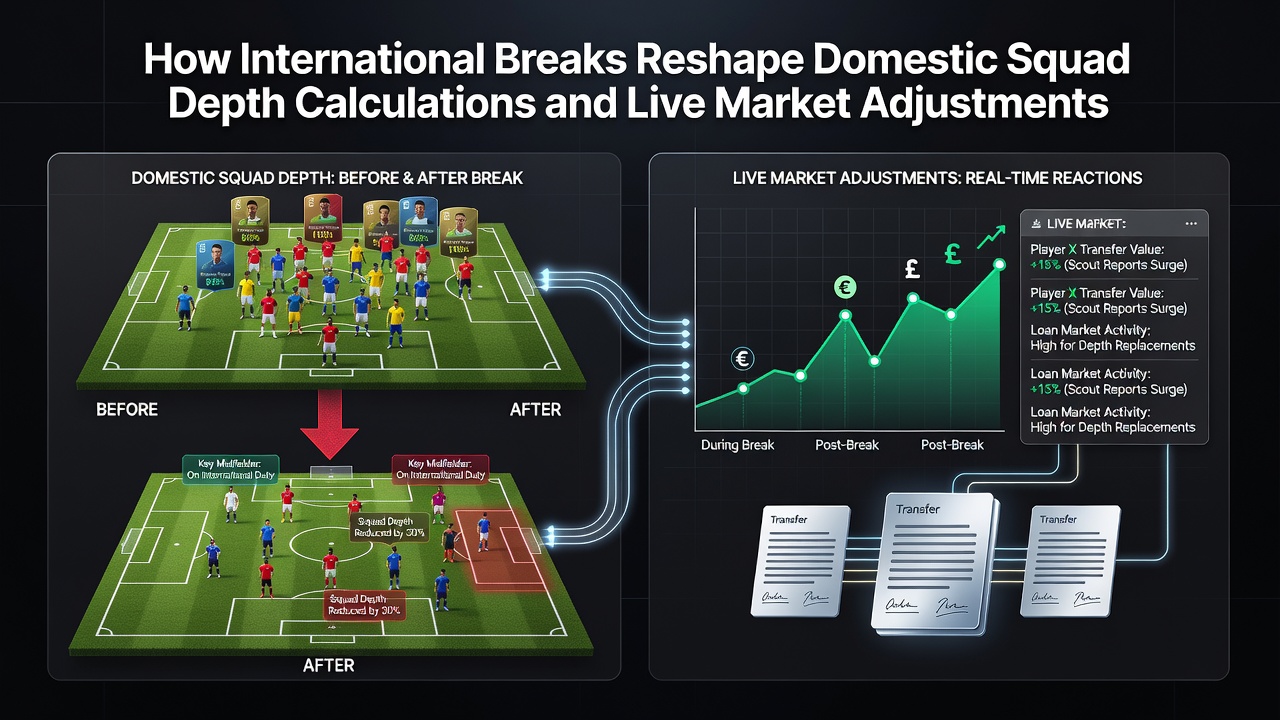
International breaks disrupt domestic schedules in ways that require clubs to adjust squad depth calculations on short notice, while live markets respond with rapid valuation changes for players returning from national team duty. Data from the 2024-2025 season showed that Premier League sides lost an average of 2.8 players per break to injury or fatigue, according to figures compiled by the Professional Footballers' Association. Those absences force managers to recalculate rotation options across multiple competitions, often within a 48-hour window after the final international match concludes.
Clubs maintain detailed depth charts that track minutes played, recovery timelines, and positional cover, yet international windows introduce variables that static models struggle to capture. Researchers at the University of Queensland documented how workload spikes during breaks correlate with elevated hamstring strain rates upon return, prompting English Championship teams to build extra defensive reinforcements into their summer planning cycles. The reality is that July 2026 windows, aligned with pre-World Cup preparation phases, will likely intensify these pressures as national federations schedule additional friendlies.
Depth Chart Adjustments During Windows
Coaches update squad matrices by factoring in travel distances, time zone shifts, and match intensity reported by national team staff. One Premier League analysis revealed that teams with greater than 40 percent squad turnover during a single break experienced a 12 percent drop in domestic win rates over the following four fixtures. Staff therefore prioritize multi-positional players who can cover gaps created when key starters remain with their countries for extended periods.
Training schedules shift toward lighter recovery sessions while analysts monitor GPS data from returning players to predict availability. Bundesliga clubs have adopted standardized reporting protocols with national associations to receive real-time updates, reducing the lag between a player's last international appearance and domestic availability confirmation. This integration allows depth calculations to incorporate fresh metrics rather than relying on pre-break projections alone.
Live Market Responses to Availability Changes
Transfer markets react swiftly once international lineups are announced, with agents and clubs monitoring minutes accumulated by target players. A 2025 study published by the Swiss Federal Institute of Technology tracked valuation fluctuations across 180 tracked transfers and found average price adjustments of 7 percent within 72 hours of major tournament windows opening. Domestic clubs facing sudden depth shortages often accelerate loan deals or short-term signings to bridge gaps until regular squad members return.
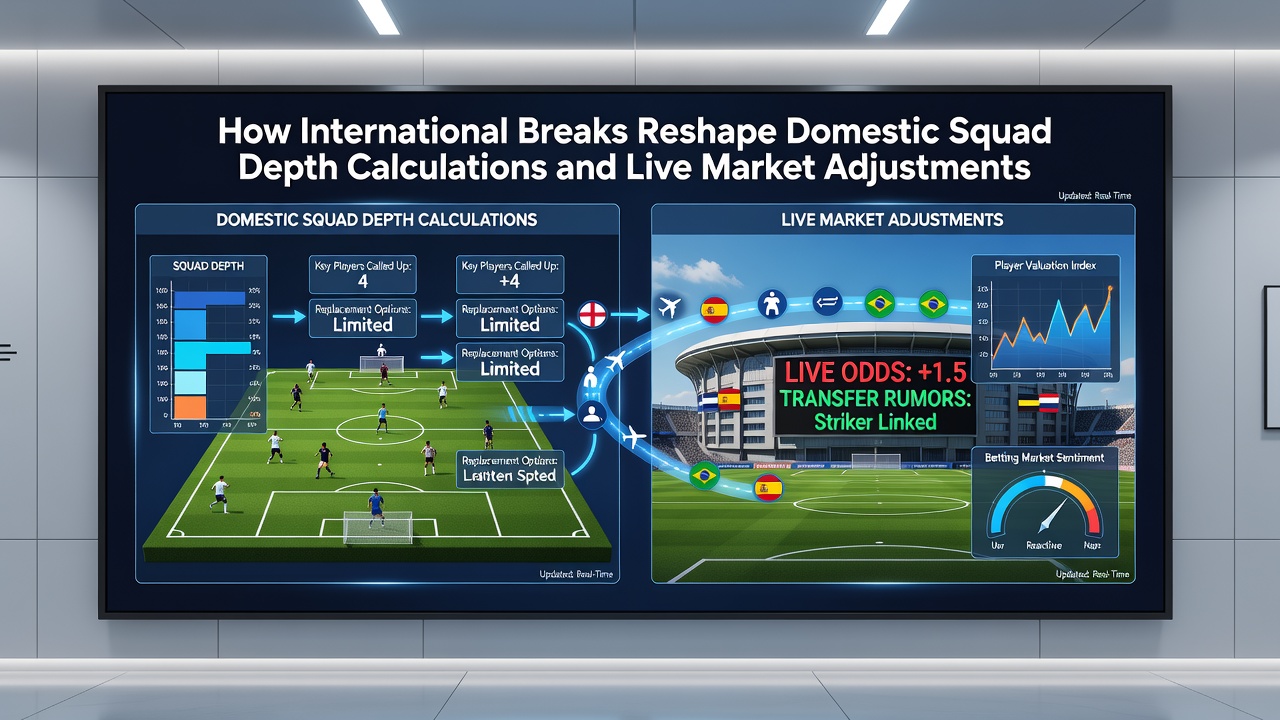
Live trading platforms operated by European agencies record increased activity in defensive and midfield positions during these periods because those roles suffer the highest absence rates. Clubs in Australia’s A-League have used the same windows to secure temporary cover from South American leagues, where schedules sometimes align differently. Observers note that successful negotiations hinge on accurate depth assessments shared between medical teams across borders.
Case Examples From Recent Seasons
During the March 2025 international window, one mid-table Premier League side lost both starting centre-backs to national team commitments and subsequent minor injuries. The club activated a pre-agreed loan option for a veteran defender within 36 hours, illustrating how pre-planned depth options convert into immediate market actions. Similar patterns appeared across Ligue 1, where clubs facing concurrent Champions League and international demands leaned on academy graduates identified through updated depth models.
Canadian researchers tracking Major League Soccer squads found that teams maintaining at least three viable options per position experienced fewer post-break performance dips. Their report highlighted the role of real-time communication between club doctors and national federation medical personnel in refining those calculations before markets close on potential reinforcements.
Strategic Planning for Future Windows
Clubs now integrate predictive analytics that layer historical injury data onto scheduled international calendars. UEFA’s club licensing requirements encourage such forward planning, pushing domestic leagues to align medical standards with national team protocols. The approach reduces reactive spending while preserving squad balance across domestic and European fixtures.
Market adjustments continue to favor clubs that maintain flexible budgets and established scouting networks in regions with overlapping international schedules. Those networks supply timely intelligence on players whose form during breaks signals readiness for immediate domestic integration. Data indicates that proactive depth management correlates with sustained league positions through congested post-break periods.
Conclusion
International breaks compel clubs to refresh squad depth calculations with live inputs from national team commitments, while transfer markets register corresponding valuation and availability shifts. Clubs that embed flexible planning and cross-border medical coordination into their processes navigate these disruptions with fewer performance interruptions. Ongoing refinement of these methods will shape how domestic leagues absorb the effects of future windows, including those scheduled around the 2026 global tournament cycle.