28 Jun 2026
Fixture Overload in European Football: How Packed Schedules Drive Tactical Shifts and Real-Time Market Reactions
Understanding Fixture Congestion Across the Continent
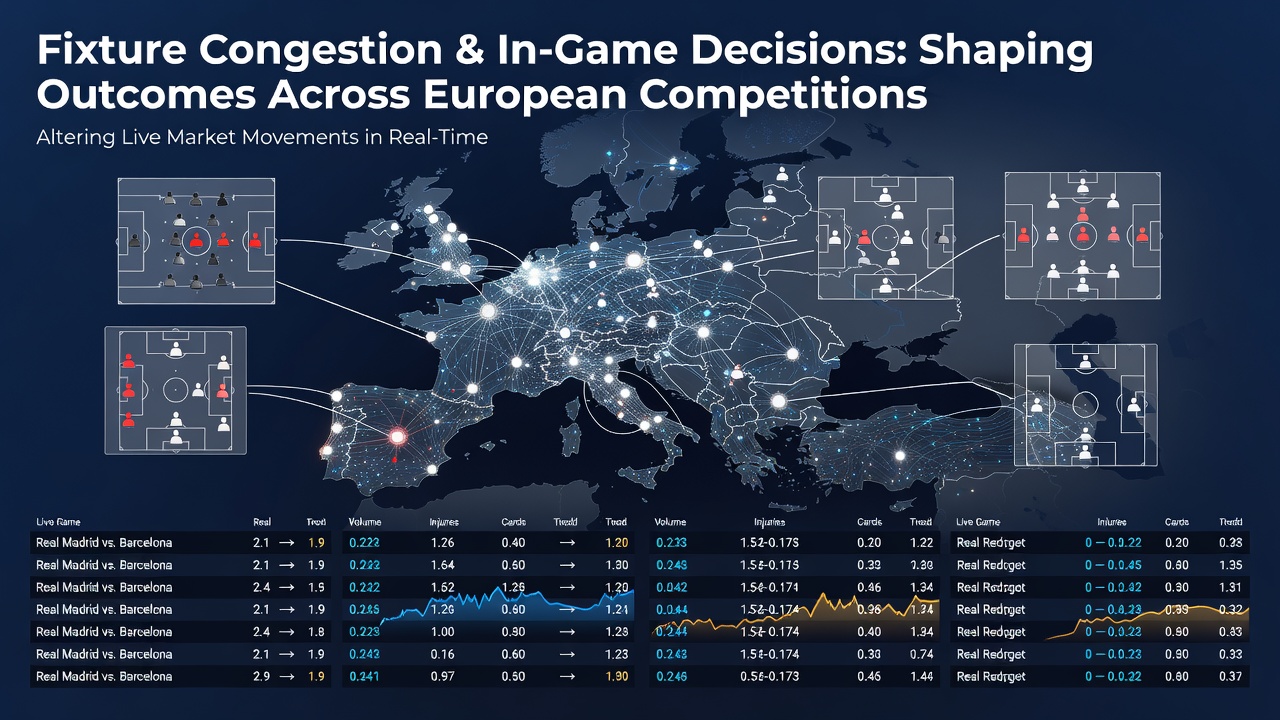
European football calendars pack domestic leagues, cup ties and continental tournaments into tight windows, which forces clubs in the Premier League, La Liga, Serie A and Bundesliga to navigate overlapping demands that stretch player resources and alter match-day choices. Data from the 2024-25 season shows top clubs often face three matches within eight days during autumn and spring blocks, while the expanded UEFA Champions League format adds further midweek fixtures that compress recovery periods. Observers note this pattern repeats across multiple seasons and creates measurable effects on squad rotation, set-piece emphasis and substitution timing.
Researchers at institutions tracking elite athlete workloads have documented how repeated high-intensity efforts without adequate rest lead to elevated fatigue markers, and teams respond by adjusting formations mid-game to conserve energy in key areas. Take one Premier League side that shifted from a high press to a compact mid-block after 60 minutes in successive games, a change tracked through positional data that showed reduced sprint distances in the final third.
Tactical Adjustments Managers Make Under Pressure
Coaches respond to congestion by prioritizing certain in-game levers such as earlier substitutions, defensive reinforcements or changes in pressing triggers, and these decisions appear consistently across competitions where fixture density peaks. Bundesliga clubs, facing a winter break that ends abruptly before European ties resume, often introduce fresh legs at halftime more frequently than sides with lighter schedules, according to match statistics compiled by European football analysts. In contrast La Liga teams sometimes delay changes until the 70th minute to maintain structure, yet both approaches reflect the same underlying constraint of limited recovery time between fixtures.
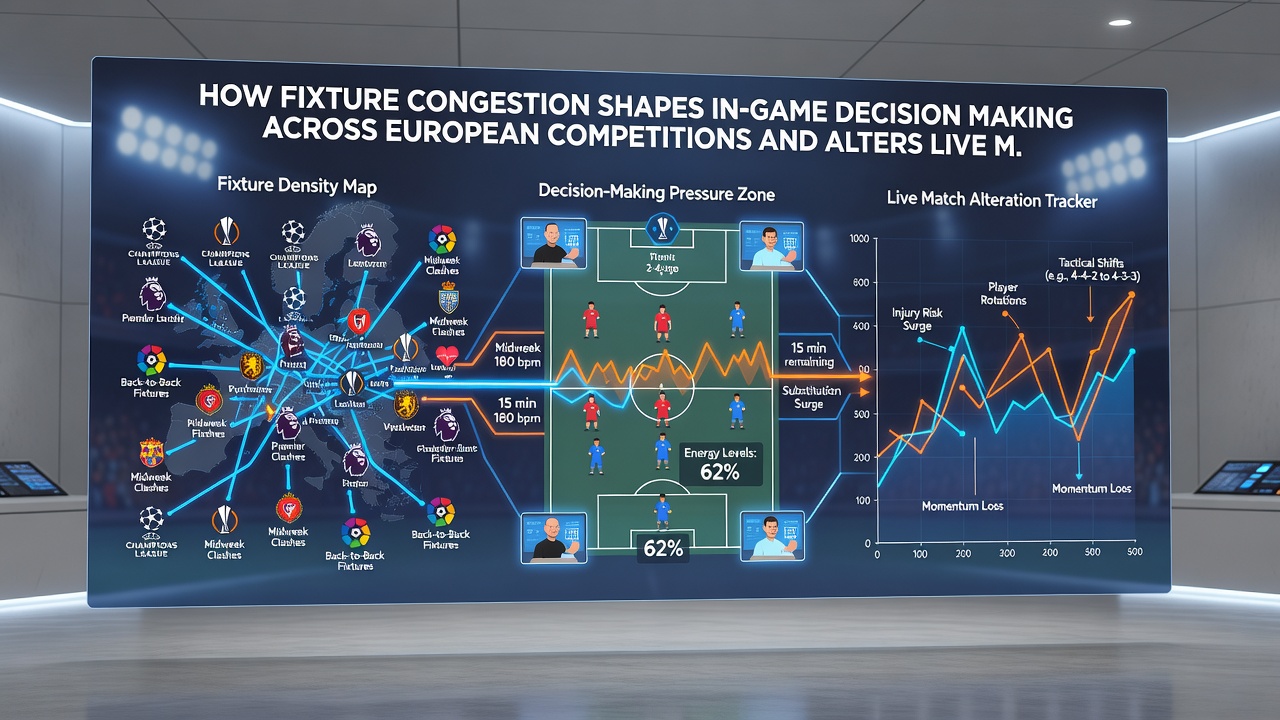
Studies tracking heart-rate variability and GPS metrics during congested periods indicate that players cover less ground in later matches of a cluster, prompting managers to alter build-up patterns from short passing sequences to longer diagonals that reduce physical duels. One study of Champions League participants between 2022 and 2025 found that teams averaged 12 percent fewer high-intensity runs after three matches in ten days, a shift that directly influences how opponents exploit space and how in-game momentum develops.
Player Workload Data and Decision Triggers
Performance databases reveal that central midfielders and full-backs experience the steepest workload spikes during congestion windows, which leads coaching staffs to modify roles or introduce specialist replacements earlier than planned. UEFA technical reports from recent seasons highlight how these workload patterns correlate with increased use of holding midfielders who sit deeper, a choice that stabilizes possession but reduces attacking transitions. Figures released by sports science groups show recovery protocols, including sleep monitoring and nutrition timing, become decisive factors in whether a player starts or enters from the bench.
And when clubs reach June 2026 the calendar pressure will intensify further because the FIFA World Cup falls immediately after the 2025-26 domestic campaigns conclude, leaving minimal downtime before national-team commitments begin. This upcoming compression means European clubs already factor international breaks into rotation plans, which alters pre-match line-ups and in-game flexibility when fatigue accumulates faster than expected.
Effects on Real-Time Market Movements
Live trading platforms register rapid adjustments in odds and position sizes once managers implement visible tactical changes during congested periods, because market participants track substitution patterns, formation shifts and tempo alterations in real time. European data providers record that volume spikes occur within minutes of a defensive-minded change in a high-stakes fixture, reflecting updated assessments of scoring probabilities. Industry analyses from organizations monitoring global sports trading note that these movements intensify when multiple clubs from the same league compete on the same midweek schedule, creating correlated performance expectations across matches.
One case from the 2024-25 UEFA Europa League showed a Serie A side adopting a five-man defense after 55 minutes due to accumulated fatigue, which triggered immediate recalibration of expected-goal models used by traders. Similar patterns appear in domestic cups where lower-league sides face top clubs on short rest, and the resulting market volatility follows directly from observed workload management rather than random variance. Research groups examining trading data across time zones have found that European congestion windows produce more pronounced intraday swings than periods with evenly spaced fixtures.
Regional Variations and Scheduling Influences
Fixture density differs markedly between leagues because of television demands and continental qualification paths, which creates distinct decision-making profiles. German clubs benefit from a longer winter pause yet still encounter autumn clusters that force early changes, whereas English sides navigate an additional domestic cup that adds midweek games without equivalent rest. Reports from the European Club Association document how these structural differences lead to varied substitution rates, with Premier League teams averaging higher numbers of changes per congested match than their Spanish counterparts.
What's notable is that external factors such as travel distances in the Champions League group phase compound the issue, prompting some managers to rest key players entirely in domestic fixtures. Data indicates this selective rotation alters both match outcomes and subsequent live trading volumes when the rested players return for European ties.
Conclusion
Fixture congestion across European competitions produces consistent patterns in managerial choices around substitutions, formations and tempo control, patterns that performance data and scheduling records make visible season after season. These adjustments in turn feed into real-time market recalibrations as participants update expectations based on observable fatigue management. As the calendar moves toward the compressed period before the 2026 World Cup, clubs and analysts continue to monitor workload metrics closely because the interplay between schedule density, on-field decisions and market responses remains tightly linked.