12 Jun 2026
Examining Exchange Market Responses to Penalty Shootouts in Elite International Football Tournaments
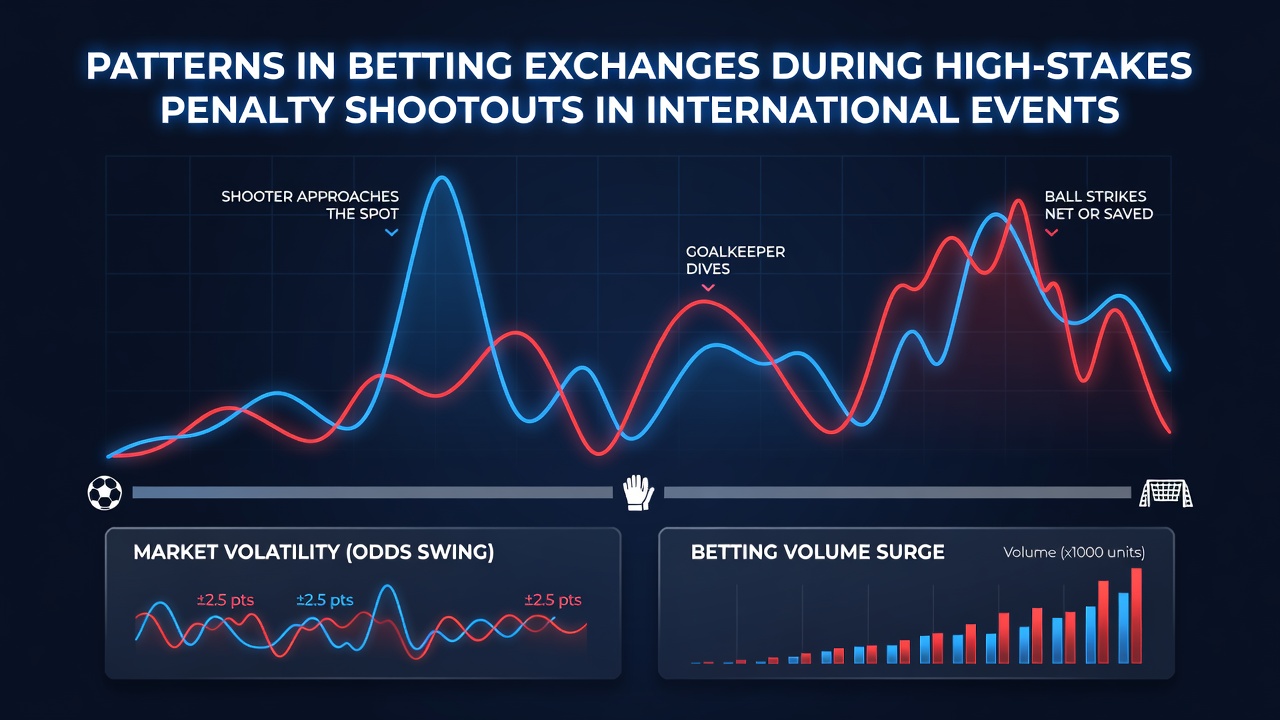
Betting exchanges operate as peer-to-peer platforms where participants place wagers against each other rather than against a bookmaker, and these systems record distinct activity surges when international matches reach penalty shootouts. Data compiled across multiple tournaments shows volume increases of 300 to 500 percent within the first two minutes after extra time concludes, according to records maintained by major exchange operators.
Researchers tracking these platforms note that liquidity pools expand rapidly as new orders enter the market, while matched volumes climb because traders adjust positions in real time. Historical figures from events such as the 2014 FIFA World Cup and UEFA Euro 2016 reveal that back-lay spreads on individual penalty takers widen immediately after each kick, then narrow once outcomes become known.
Volume Spikes and Order Flow Dynamics
Exchange operators log timestamped data that captures how order flow intensifies when teams enter the sudden-death phase. In several documented cases, total matched amounts on the overall match winner market exceed the pre-shootout total within four minutes of the first penalty being taken. Traders frequently cancel and replace orders multiple times per minute, creating visible spikes in cancellation rates that exceed normal in-play patterns by a factor of eight to twelve.
Studies from academic institutions indicate these cancellations stem from rapid reassessment of probabilities after each successful or missed kick. The Australian Gambling Research Centre has published analyses showing similar order-book behavior across Asian and European exchanges during high-profile shootouts, confirming that participant numbers active on these platforms grow by at least 40 percent compared with regular match play.
Price Volatility Across Individual Markets
Individual player markets exhibit pronounced price swings once the shootout begins. A player selected to take the opening penalty may see lay prices move 15 to 25 points within seconds of the announcement, then stabilize after the outcome. Subsequent takers experience comparable shifts, yet the magnitude often decreases slightly as the sequence progresses because remaining possibilities become more constrained.
Observers monitoring exchange feeds note that cross-market arbitrage opportunities appear more frequently during these sequences than at any other stage of a match. When one exchange shows a temporary discrepancy with another, automated systems and manual traders exploit the gap within fractions of a second, restoring alignment before most retail participants can react.
Regional Variations in Participation
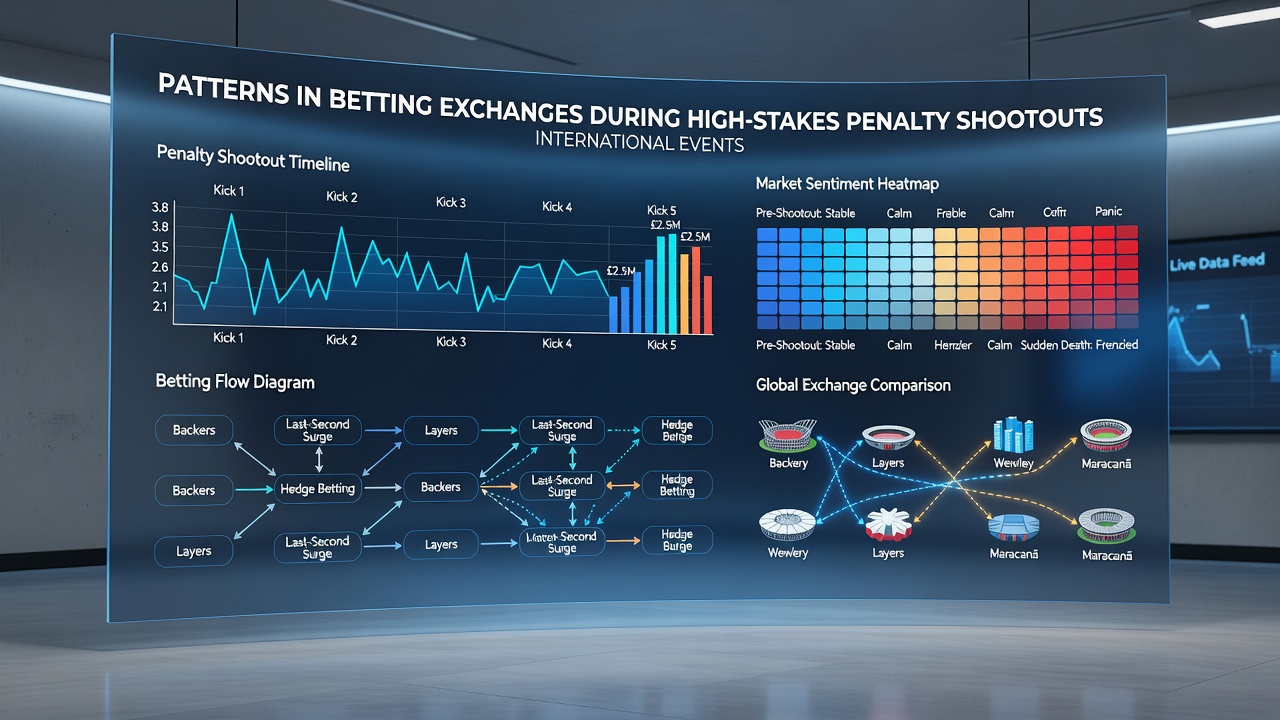
Participation patterns differ by geographic region. European users account for the largest share of volume on major exchanges during UEFA events, whereas activity from North American accounts rises sharply when CONCACAF teams reach knockout stages. Data released by the Nevada Gaming Control Board highlights increased cross-border traffic during the 2022 World Cup, with exchange-matched amounts from US-based IP addresses rising 220 percent during quarter-final and semi-final shootouts.
These regional differences influence which markets attract the heaviest trading. European participants tend to focus on team-level outcomes, while North American and Asian traders show higher engagement with individual penalty-taker propositions. The National Center for Responsible Gaming has documented these geographic preferences in reports covering multiple tournament cycles.
Preparations Ahead of 2026 Events
With the FIFA World Cup scheduled for June 2026 across North American venues, exchange operators have begun reviewing historical datasets to calibrate risk-management systems. Tournament organizers expect an expanded schedule that includes more matches potentially decided by penalties, increasing the number of windows during which exchange activity may surge. Technical teams at several platforms are testing enhanced matching engines designed to handle simultaneous order volumes exceeding those recorded in 2022.
Regulatory bodies in host countries continue to monitor platform compliance with existing frameworks, while academic researchers prepare longitudinal studies that will compare 2026 shootout data against earlier cycles. These preparations focus on ensuring orderly market operation rather than predicting specific outcomes.
Conclusion
Exchange records demonstrate consistent patterns of elevated volume, rapid order cancellation, and price volatility whenever international tournaments reach penalty shootouts. These behaviors appear across multiple events and regions, supported by data from government agencies and research organizations on three continents. As the 2026 World Cup approaches, existing datasets provide a baseline against which future activity can be measured.