3 Jul 2026
Decoding the Influence of Pitch Conditions on In-Play Football Wagers Across Major Tournaments

Pitch conditions shape the flow of play in ways that directly alter in-play football wagers during major tournaments, and data from multiple leagues shows measurable shifts in goal rates, corner counts, and possession metrics when surfaces change. Observers note that grass length, moisture levels, and turf wear interact with weather patterns to create distinct betting environments, particularly in events such as the Premier League, UEFA Champions League, and international competitions scheduled through July 2026.
How Surface Variables Alter Match Dynamics
Longer grass slows ball speed and increases friction, which tends to reduce the number of successful long passes while elevating the frequency of short combinations and defensive recoveries. Shorter, firmer pitches accelerate the ball and encourage direct play, often leading to higher shot volumes according to performance databases maintained by European football federations. Moisture content further modifies these effects; saturated fields increase sliding tackles and loose balls, whereas baked surfaces produce erratic bounces that complicate goalkeeper positioning.
Researchers tracking UEFA Champions League fixtures across multiple seasons have documented that matches on heavily used pitches after the group stage show a 12 to 18 percent drop in completed through balls compared with opening rounds, a pattern that influences live odds on both team totals and player-specific props. Tournament organizers in North America, preparing venues for the 2026 World Cup, have already begun testing hybrid turf systems designed to maintain consistency across the July schedule when daytime temperatures frequently exceed 30 degrees Celsius.
In-Play Betting Markets Most Affected by Pitch State
Corner markets respond quickly to surface changes because longer grass reduces the likelihood of balls reaching the byline cleanly, while firm pitches increase the chance of deflections that produce additional set pieces. Goal-line markets move in tandem with moisture levels; wet conditions correlate with fewer low-driven shots and more attempts from distance, altering the timing of in-play entries on over/under lines. Possession percentages also fluctuate, with teams adapting their build-up speed within the first fifteen minutes once players assess traction underfoot.
Industry reports compiled by the Asian Football Confederation highlight that World Cup qualifying matches played on natural grass in humid climates during 2025 produced higher foul rates in the opening half, prompting earlier adjustments to yellow-card wagers. These same reports note that artificial surfaces approved for certain 2026 venues maintain higher ball roll speeds even after heavy rainfall, creating a contrast that bettors monitor through early-match statistics.
Regional and Tournament-Specific Patterns
Premier League grounds exhibit pronounced seasonal variation because winter rainfall combined with frequent fixture congestion leads to patchy turf by February. Summer tournaments such as the Copa América, by contrast, often encounter drier, harder pitches that favor teams accustomed to quick transitions. Data aggregated by the Confederation of African Football shows that matches on uneven surfaces in equatorial regions produce elevated rates of long-range efforts, shifting in-play probabilities for both team and player goal markets.
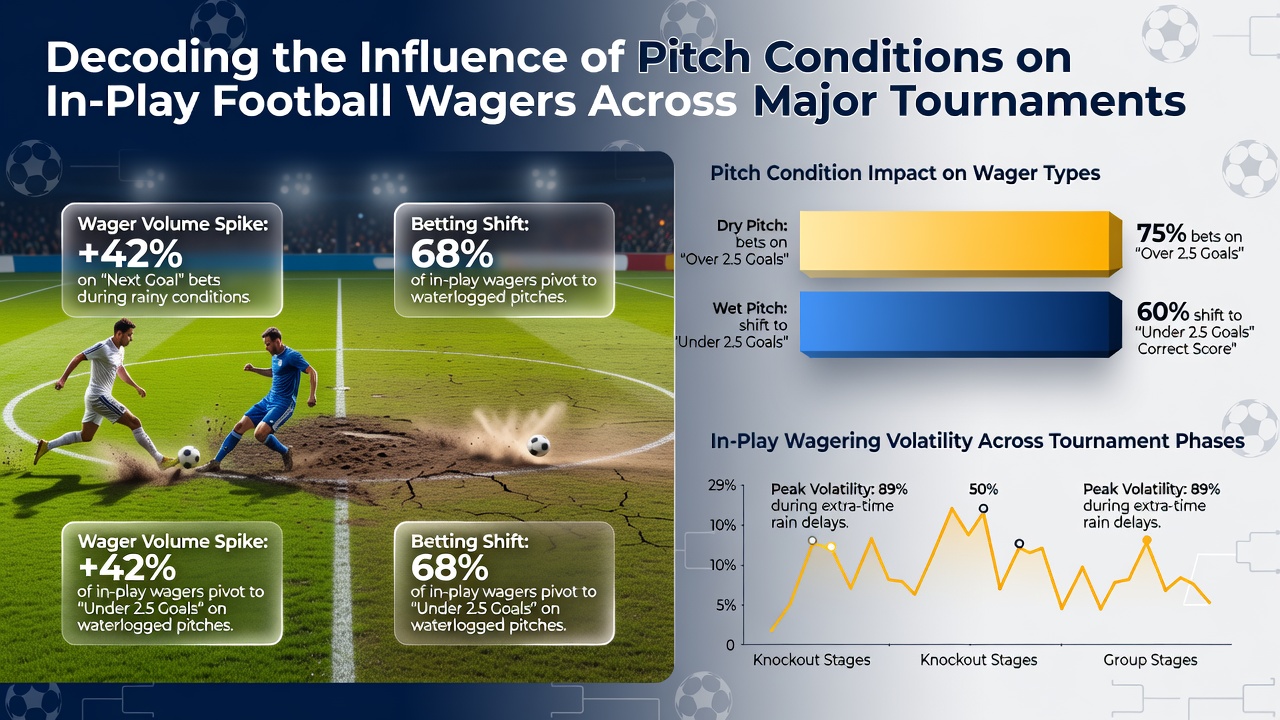
Those who study European competitions have observed that Champions League knockout ties played on re-laid pitches after mid-season renovations display steadier ball speeds and fewer interruptions, allowing possession-based sides to maintain higher completion percentages into the later stages. July 2026 will introduce additional variables when matches move between covered and open-air stadiums across three host nations, each with distinct humidity and temperature profiles that groundskeepers must balance against broadcast schedules.
Monitoring Real-Time Indicators
Broadcasters and data providers now supply pitch-condition updates at regular intervals, including grass height measurements and soil moisture percentages, which feed directly into live models used by professional trading desks. When early substitutions occur because players slip repeatedly, algorithms adjust expected goal values within minutes, prompting rapid movements across multiple in-play markets simultaneously. Tournament officials have begun publishing pre-match surface reports that include expected maintenance schedules, giving participants access to consistent information before kickoff.
Studies conducted at sports science departments in Australia and Canada have quantified how temperature gradients across a single pitch can create micro-variations in ball behavior, particularly on larger fields used for international fixtures. These findings suggest that teams warming up on one side of the pitch may encounter different conditions once play begins, an element that influences early in-play positioning on both team and half-time result wagers.
Conclusion
Pitch conditions remain a persistent variable across every major tournament, and teh data collected from leagues and confederations continues to demonstrate clear correlations with in-play market movements. As preparations advance for July 2026, venue operators and analysts alike are refining measurement protocols to capture surface changes with greater precision, ensuring that statistical models reflect the actual playing environment rather than historical averages alone.